
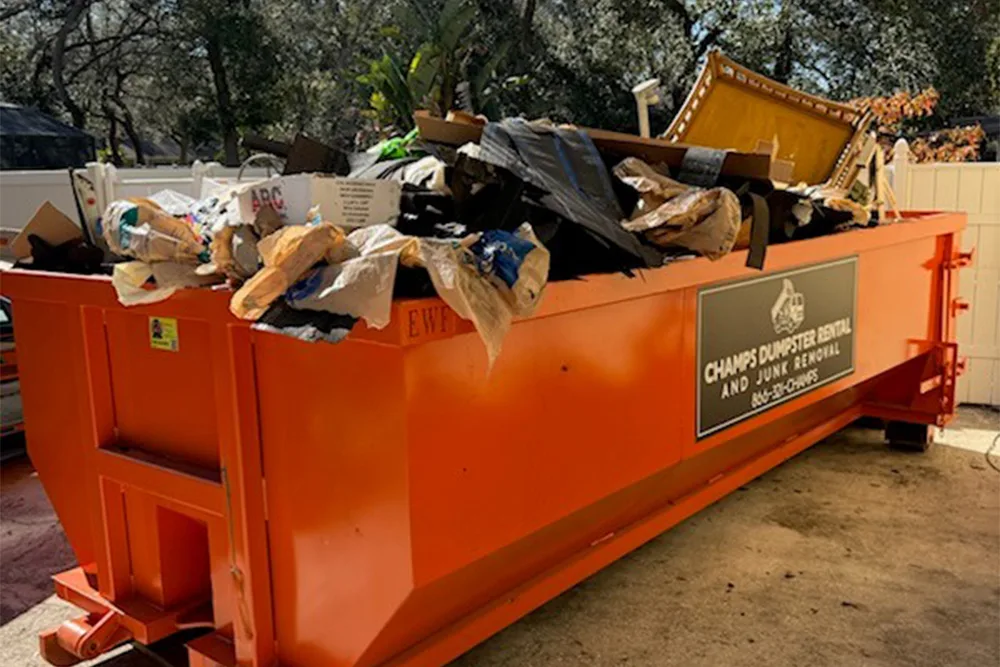
One of the most common questions customers ask before renting a dumpster is simple: "What can I throw away?"
While dumpster rental makes cleanup projects easier, not everything can legally or safely go into a roll off container. Understanding what is allowed and what is prohibited helps homeowners, contractors, property managers, and business owners avoid delays, extra fees, and compliance issues.
At Champs Dumpster Rental and Junk Removal, we believe that customer education is one of the most important parts of our service. Before every rental, we take the time to explain the rules, answer questions, and make sure customers understand exactly how the process works.
As we often tell our customers: "Our personal connection includes explaining the process upfront as well as explaining our contract upfront. It explains the loading process, the do's and don'ts, what is not allowed, and safety first." That commitment to communication helps create a smoother and safer experience for everyone involved.
Why Dumpster Restrictions Exist
Many people assume that a dumpster can hold virtually anything. In reality, local landfills, transfer stations, and environmental agencies have strict disposal requirements. Certain materials create environmental risks, fire hazards, transportation concerns, or regulatory violations.
These restrictions exist to protect:
Public health
Groundwater supplies
Local communities
Waste management workers
The environment
Following these rules helps ensure waste is handled responsibly and legally. At Champs Dumpster Rental and Junk Removal, we work closely with customers to explain these requirements before a container is delivered.
Common Items That Can Go Into a Dumpster
Most household, renovation, construction, and cleanup debris can be safely disposed of in a roll off dumpster. Typical approved materials include:
Household junk
Furniture
Cabinets
Drywall
Flooring materials
Wood
Yard debris
Roofing materials
Construction debris
Non hazardous renovation waste
General clutter
These materials are commonly generated during home improvement projects, garage cleanouts, property cleanups, and remodeling jobs. Our team helps customers determine whether their debris is suitable for dumpster disposal before the rental begins.
Common Prohibited Materials
While many materials are accepted, some items require special handling. Examples often include:
Paints
Chemicals
Hazardous waste
Automotive fluids
Tires
Batteries
Certain electronics
Propane tanks
Flammable liquids
Industrial chemicals
These materials typically require specialized disposal methods that comply with local and state regulations. That is why we always discuss project details before recommending a dumpster.
As we explain: "We always ask what is going in the can to explain what is allowed and to educate customers about the cost variables." This conversation helps prevent costly surprises and ensures compliance with disposal regulations.
Why Paint Cannot Usually Go Into a Dumpster
Paint is one of the most frequently misunderstood materials. Liquid paint can leak into landfills, contaminate other waste streams, and create environmental concerns. Many communities offer designated paint recycling or hazardous waste collection programs for proper disposal. Before disposing of paint, customers should always verify local requirements or ask our team for guidance.
Understanding Tire Disposal Rules
Many customers are surprised to learn that tires are often prohibited in standard dumpster rentals. Tires can trap gases and create operational challenges at landfill facilities. Because of this, they usually require specialized recycling or disposal programs. If your cleanup project involves old tires, let us know in advance so we can recommend the proper disposal solution.
Handling Chemicals Safely
Household chemicals and industrial products require extra caution. Examples include solvents, pesticides, cleaning chemicals, pool chemicals, fuel products, and automotive fluids. Improper disposal can create serious environmental and safety concerns. At Champs Dumpster Rental and Junk Removal, safety remains our highest priority. We encourage customers to discuss questionable materials before loading them into a container.
Construction Debris Requires Special Attention
Construction projects generate a wide variety of waste materials. While most construction debris can go into a dumpster, certain materials require additional planning. Examples include concrete, brick, dirt, roofing shingles, and asphalt.
These materials are significantly heavier than typical household junk. Because of their weight, disposal costs and container recommendations may vary. That is why we openly discuss project details before delivery. "We openly explain the upfront cost and tonnage overages." Transparency helps customers understand exactly how pricing works before the project begins.
Why Weight Matters in Dumpster Rental
Many customers focus on dumpster size while overlooking weight limits. However, weight often has a greater impact on disposal costs than volume alone. For example, a dumpster filled with old furniture may appear full but remain relatively light. Conversely, a partially filled dumpster containing concrete can weigh several times more. Understanding this difference helps customers select the right container and avoid unexpected charges. Our team takes the time to explain these factors before recommending a dumpster size.
Choosing the Right Dumpster for Your Project
The type of debris you are disposing of plays a major role in determining the best dumpster. Different projects generate different materials.
Examples include:
Home Renovations: Common materials include drywall, flooring, cabinets, and construction debris.
Garage Cleanouts: Typical items include furniture, boxes, household clutter, tools, and unwanted belongings.
Landscaping Projects: These projects often generate branches, brush, leaves, fencing materials, and yard debris.
Roofing Projects: Roof replacements frequently produce large amounts of shingles and underlayment materials.
Each project has unique disposal requirements. Our team helps customers choose the right dumpster based on both volume and weight. Learn more about our dumpster options here: Dumpster Rental
Why Customer Education Matters
One of the biggest frustrations customers experience with some waste removal companies is a lack of information. Unexpected fees, prohibited materials, and unclear rules can quickly turn a simple project into a stressful one.
At Champs Dumpster Rental and Junk Removal, we take a different approach. We believe customers deserve clear communication from the beginning.
That is why we explain:
What can go in the dumpster
What cannot go in the dumpster
Weight limitations
Disposal requirements
Pricing structures
Loading guidelines
Our goal is to eliminate confusion and create a positive customer experience.
When Junk Removal Is the Better Option
Sometimes customers have materials that cannot be easily placed into a dumpster. In these situations, professional junk removal may be a better solution. Our team can help evaluate items, identify proper disposal methods, and determine the most efficient approach.
As we often tell customers: "Every situation involves a customer's specific needs and budget." "If someone needs the help and wants things completed in a timely manner, junk removal is the right choice." Our junk removal service provides flexibility for customers who need additional support.
Garage Cleanouts Often Reveal Unexpected Items
Garage cleanouts frequently uncover materials that homeowners forgot they had. Old paint cans, automotive fluids, batteries, and chemicals are common discoveries. Before beginning a major garage cleanup, it is helpful to identify potentially restricted items so they can be handled properly. Our team helps customers sort through these situations and identify the safest disposal options.
Yard Debris Disposal Made Easy
Most yard debris can safely go into a dumpster or be removed through professional hauling services. Examples include tree limbs, shrubs, leaves, landscaping debris, brush, and storm debris. Proper disposal keeps properties clean, safe, and attractive throughout the year.
Learn more about our outdoor cleanup services here: Yard Debris Pickup
The Importance of Working With a Local Dumpster Company
National brokers often focus on processing orders quickly. Local companies focus on helping customers understand the process. At Champs Dumpster Rental and Junk Removal, we take the time to answer questions and provide guidance before, during, and after every rental.
As we often say: "You will speak to us every time and we will ensure your satisfaction and timeline is met every time at the best cost." "Customer first every time." That commitment allows us to provide a level of service that goes beyond simply delivering a dumpster.
Safe Disposal Starts With the Right Information
The most successful cleanup projects begin with good planning. Knowing what can and cannot go into a dumpster helps customers:
Avoid delays
Prevent extra fees
Stay compliant with regulations
Protect the environment
Complete projects more efficiently
By working closely with customers from the beginning, we help ensure every dumpster rental and junk removal project runs smoothly.
Contact Champs Dumpster Rental and Junk Removal Today
Whether you need dumpster rental, junk removal, garage cleanout services, construction debris removal, yard debris pickup, or property cleanup assistance, Champs Dumpster Rental and Junk Removal is here to help.
Contact our team today for expert guidance, transparent pricing, and dependable local service. We will help you choose the right disposal solution while ensuring your project stays safe, compliant, and stress free.