
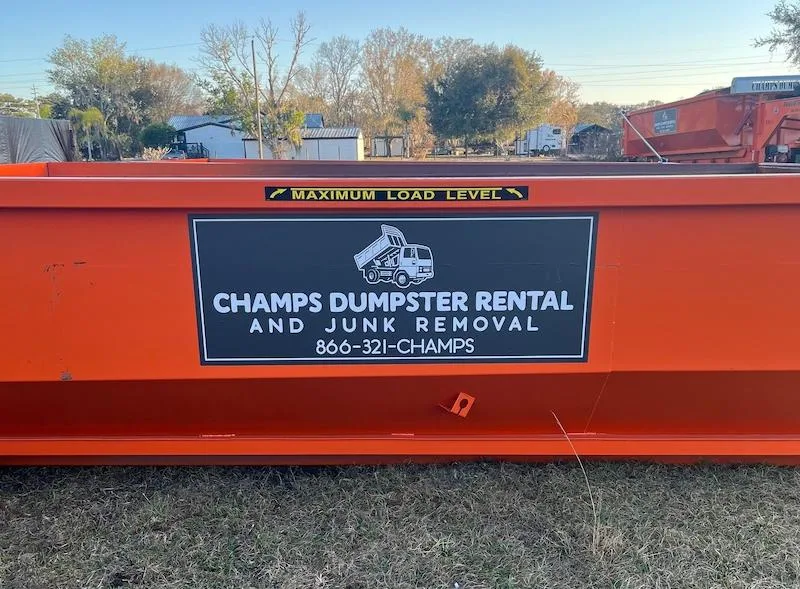
Concrete, roofing shingles, and demolition debris are some of the heaviest materials you'll haul on any job site. Getting the dumpster wrong costs you money fast. Orlando contractors deal with unique challenges here: Florida's intense heat accelerates project timelines, summer storm season creates urgent teardowns, and local disposal rules carry real fines for non-compliance. Choosing the right container from the start keeps your project on schedule and your budget intact.
Need help picking the right container for your next job? Call Champs Dumpster Rental and Junk Removal at (866) 321-2426 for fast answers and same-day delivery options across Central Florida.
What Makes Heavy Debris Different From Regular Construction Waste?
Heavy debris, specifically concrete, asphalt, and roofing shingles, weighs far more per cubic foot than standard construction waste like drywall or lumber. A single cubic yard of concrete weighs roughly 4,000 pounds. A full square of architectural shingles runs between 350 and 450 pounds. Those numbers add up quickly when you're clearing a driveway in Dr. Phillips or replacing a tile roof in Lake Nona.
Standard dumpster rentals include a weight allowance. Our dumpster rental containers include 2 tons in the base rate, with additional weight billed at $65 per ton. Overfill a container with concrete or shingles, and that overage adds up fast. Knowing your material type before you order protects your margin.
This is why material classification matters before you book. A 20-yard dumpster loaded exclusively with concrete can hit its weight limit well before the bin looks full. Our team sees this often on demolition jobs across Central Florida, and it's one of the first things we ask about when contractors call.
Which Dumpster Size Is Right for Concrete and Roofing Jobs?
For heavy debris, a 10-yard or 15-yard dumpster is almost always the better call over a 20-yard container. Smaller bins reach their weight limit in proportion to their volume, which makes overages easier to predict and control.
Here's how the sizing typically breaks down for heavy material jobs:
- 15-yard dumpster (starting at $275): Best for single-square roofing tear-offs, small concrete slab removals, and residential demolition projects. Holds approximately 4.5 pickup truck loads and includes 2 tons.
- 20-yard dumpster (starting at $375): Better suited for larger roofing jobs, multi-room demo, or mixed debris loads where not everything is heavy material. Also includes 2 tons, with the same $65/ton overage rate.
For a full roof tear-off on a standard 2,000 sq. ft. home, you're typically looking at 2 to 3 tons of shingle debris. A 15-yard bin usually handles that cleanly. Concrete slab removals vary widely, but a 10x10 slab at 4 inches thick generates close to 2 tons on its own.
When in doubt, splitting a large concrete pour removal across two smaller pulls is often cheaper than paying overage fees on one oversized bin.
Does Florida Have Specific Disposal Rules for Roofing and Concrete Debris?
Florida has strict construction and demolition (C&D) debris regulations, and Orange County enforces them. Concrete, asphalt, and roofing shingles are classified as C&D debris under Florida Statute 403.7046. Mixing prohibited materials, like asbestos-containing shingles from pre-1980 structures, with general debris can result in fines starting at $500 per incident.
Older homes in areas like Winter Park or College Park sometimes have legacy roofing materials that require separate handling and disposal before a standard dumpster rental applies. If you're tearing off a roof on a structure built before 1980, test for asbestos before ordering a container. Standard dumpsters cannot accept asbestos-containing materials.
For standard asphalt shingles, concrete, and clean fill, disposal follows normal C&D protocol. Our junk removal and dumpster services handle responsible disposal, so you don't need to track down a compliant facility yourself.
How Should You Load a Dumpster With Heavy Debris Safely?
Load heavy materials low and even. This is the single most practical rule for safe transport of concrete and roofing debris.
Concrete blocks or broken slab pieces should go in first, spread flat across the container floor. Never stack heavy debris in one corner. Uneven weight distribution shifts during transport and can cause road hazards, which creates liability exposure for your crew and your company.
A few specific loading practices that matter:
- Break concrete into pieces no larger than 18 inches before loading. Large slabs are harder to distribute evenly and slow down the unloading process at the disposal facility.
- Don't mix roofing shingles with loose gravel or dirt if you're trying to stay under the weight limit. Those materials are denser than they look.
- Keep debris below the container's fill line. Overfilled dumpsters can't be transported legally on Florida roads, and our drivers will flag this before pickup.
On a recent job near Windermere, a contractor loaded an entire demo haul to one side of a 20-yard bin. We caught it before the truck left the site. Redistributing took about 20 minutes, but it avoided a potential road incident and a delay to their project timeline.
Does Choosing the Right Dumpster Actually Save You Money?
Yes, and the savings are more predictable than most contractors expect. The two biggest cost drivers on heavy debris rentals are overage fees and extended rental time.
Overage fees at $65 per ton compound quickly on dense materials. Three tons over your included weight on a concrete removal job adds $195 to your bill before the dumpster even leaves. On a tight project margin, that's real money.
Rental time extensions cost $30 per day. If you order a dumpster that's too small and need a second pickup, you're also losing scheduling time, especially during busy Central Florida construction seasons when availability is tighter.
Ordering the first time correctly typically saves contractors between $100 and $300 per job. Across a full season of roofing or demo work, that's a meaningful difference.
The right call on dumpster size also keeps your job site cleaner and your project moving. Waiting on a second container, dealing with an overloaded bin, or managing a disposal fine all add hours to a project that didn't need them.
Get the Right Dumpster for Your Next Orlando Job
Heavy debris disposal doesn't have to slow your crew down or eat into your profit. Matching the right container size to your material type, knowing the weight limits, and loading correctly make the whole process faster and less expensive.
Champs Dumpster Rental and Junk Removal serves contractors across Orlando, Belle Isle, Winter Park, and all of Central Florida with 15-yard and 20-yard roll-off containers, flat-rate pricing, and same-day delivery when you need it. Call us at (866) 321-2426 to talk through your project and get the right container scheduled fast.